September 2024 Newsletter
Kirkland Income Fund Update
We are pleased to announce another positive month with a net return of 0.83% for our investors. We completed one new loan and finalized one existing loan. Significant progress was made on non-performing loans; St. Joseph is fully paid off, and Hampstead has one payment left to significantly reduce its balance.
Brock has been hands-on in Michigan, engaging with property management, contractors, and various state services to improve the performance of the medical office building in Pontiac that we acquired via Deed-in-Lieu. The first tenant has already moved in, and other tenants, including several pharmacies, have shown interest due to the building's prime location just off a major thoroughfare and opposite a hospital. While work remains to be done, we are pleased with the positive progress and aim to restore the property as a performing asset for the Fund. Below is a photo of Brock on-site working with the property management team on repairs and an additional photo of the building.


Rates and Inflation
We sent out an earlier email about how rate cuts affect the Kirkland Income Fund.
In the September Federal Open Market Committee (FOMC) meeting, the rates were lowered by 50 basis points. The Federal Reserve acknowledged the necessity of injecting growth back into the system to maintain the trajectory of their plan. Described as a "recalibration," this move was clarified in the meeting notes as not being a response to a failing economic system.
The Federal reserve is still very focused on inflation and employment. They feel both are at good levels and creating a profile that will continue a strong economy for the US.
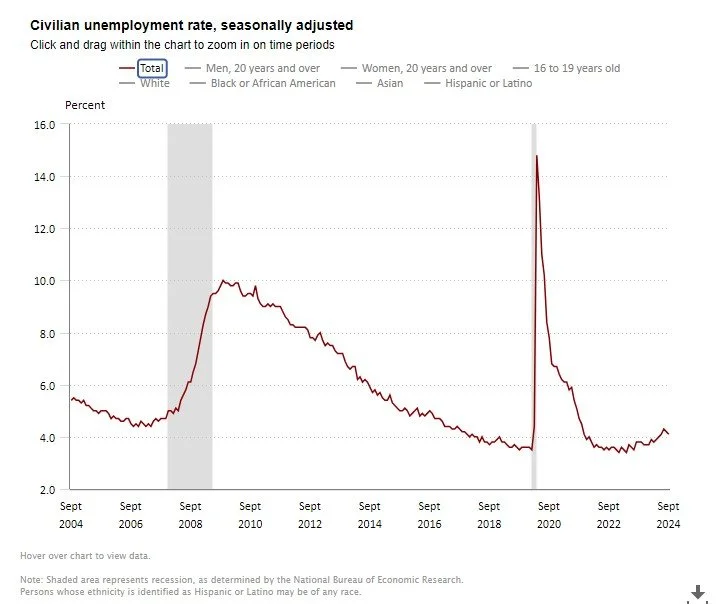
In September, the unemployment rate dropped to 4.1%, showing minimal change compared to the previous months of 4.3% in July and 4.2% in August. The key focus lies in analyzing whether this decline indicates a consistent trend towards lower unemployment rates, potentially reducing the likelihood of a Fed ease in November. If the trend persists, it could suggest that the Federal Reserve's decision was correct. The upcoming October data will play a crucial role in determining the probability of another Fed ease.
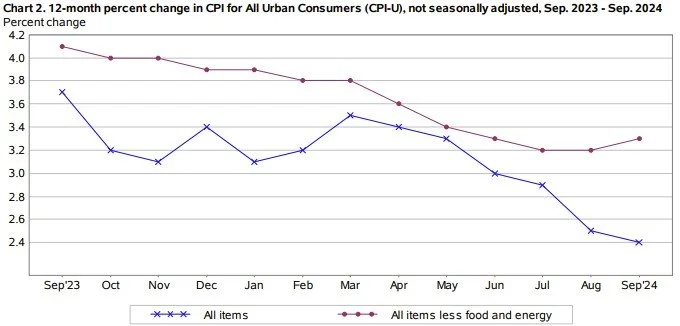
In September, the Consumer Price Index (CPI) came in at 2.4%, slightly above expectations but still marking the smallest 12-month increase since February 2021. Energy prices dropped by 6.8%, contributing to the overall decrease in the All Items index. According to the Bureau of Labor Statistics chart below, it seems that inflation is under control and moving towards the Federal Reserve's target.
Based on the consensus, it is expected that there will be another interest rate cut at the upcoming November FOMC meeting. Looking back at historical data, equity markets tend to thrive when rates are lowered, especially if a recession is avoided. Similarly, fixed income investments typically perform well in a declining rate environment. Over the years, bonds have shown a 10% outperformance compared to cash during periods of rate cuts. Interestingly, the asset class that tends to struggle during such times is CASH. It might be a good opportunity to reassess cash holdings or cash equivalent investments and explore alternative options that align with your risk tolerance.
Even though the consensus indicates further easing ahead, there are several noteworthy arguments against a rate cut in November:
The economy is expanding at a rate greater than long-term historical rates.
Financial markets are not showing signs of needing rate cuts. In the last quarter, equities markets, bond markets, gold and credit have all pushed to higher levels.
Markets
In September, we've observed broad participation across Equity (Multiple Sectors), Bonds, Gold, and Credit. Despite the favorable global rate easing and optimistic earnings projections providing strong support, we should anticipate ongoing challenges and uncertainties stemming from factors like the upcoming elections and global conflicts.
Take your time before making any investment decisions. Public markets tend to be more volatile compared to private markets. As I mentioned before, the effects of rate changes, both positive and negative, will not immediately affect private markets significantly, especially niche markets. It will take some time for these changes to improve the exit opportunities in various markets, but the actual impact may not be visible for several months or even years, depending on various specific factors for the class of investment.
It's important to recognize that certain sectors, particularly private equity, are still facing challenges. These issues may persist as the impact of recent rate adjustments unfolds, indicating that we are not in the clear just yet. Investors looking for liquidity should exercise caution and avoid premature celebrations. It's worth noting that the effects of rate cuts on various private equity assets, such as real estate and venture capital, will require time to materialize. Therefore, prioritizing risk evaluation and management remains crucial when making investment choices.
So, where is the opportunity? It lies in being the capital provider. The future demand for capital on a global scale will originate from real estate, businesses, and government entities. It's time to prepare some of that dry powder and be on the lookout for opportunities!
Bank of America Study:
We came across a recent study that we wanted to share with all of you. It's clear that those of you reading this are already familiar with alternative investments, but for many investors and advisors, alternatives are not even on their radar. However, this may change for future generations. According to a 2024 Bank of America Private Bank study on investment trends, the majority (72%) of younger wealthy investors (ages 43 and under) believe that achieving above-average returns solely through traditional public stocks and bonds is no longer feasible. Instead, these younger investors with significant assets (at least $3 million) are increasing their allocations to private investments and other alternative assets, with an average portfolio allocation of 17%. Furthermore, their interest in these investments is on the rise, as 93% of respondents stated that they plan to increase their use of private investments in the coming years. This shift highlights the potential benefits that these investments can offer, such as higher returns and improved diversification.
Manipulation of Investors
It's a common occurrence, happening countless times every single day. The prevalence of various types of fraud is increasing, taking on various shapes and forms. An insightful article from the Time Magazine, titled "The Age of Scams", sheds light on the escalating issue of scams in the modern world and the resulting global repercussions. While wire fraud and manipulation schemes are a concern, they're not the specific type of fraud we're focusing on - one that, in some aspects, is even more straightforward to detect. Let's delve into a manipulation tactic that we've encountered numerous times throughout our professional journeys, where advancements in technology are contributing to a perfect storm for manipulating investors interested in alternative investments: Data Manipulation. Many investment managers and specialists in alternative investments often present charts showcasing their outperformance against a widely recognized index, which tends to resonate with numerous investors. Here are some key red flags to be mindful of:
Comparing Apples & Oranges. Is the investment being compared to a similar asset. If not, then you should have the manager explain why that comparison is made.
Time Period. What time period has been used? Often, marketing people will grab a time period that tells their story the best. For example, many investment comparison charts leave out periods of stress like 2008, 2022. Make sure the chart shows since inception.
Is the performance being shown via a custom index that is representative of the investment but not actually an investable asset.
Alternatives are often not valued daily. Understand underlying valuation procedures of the investment to make sure you know whether the returns are realized or unrealized or a combination of the two to generate a return.
Read the footnotes. If there are no footnotes and you still have questions this is the time to verify the chart with the manager.
Below is a chart that portrays the probability of whether the information supplied in an investment marketing report is reliable or not. You still must do your homework and perform the 5 tests/steps above.
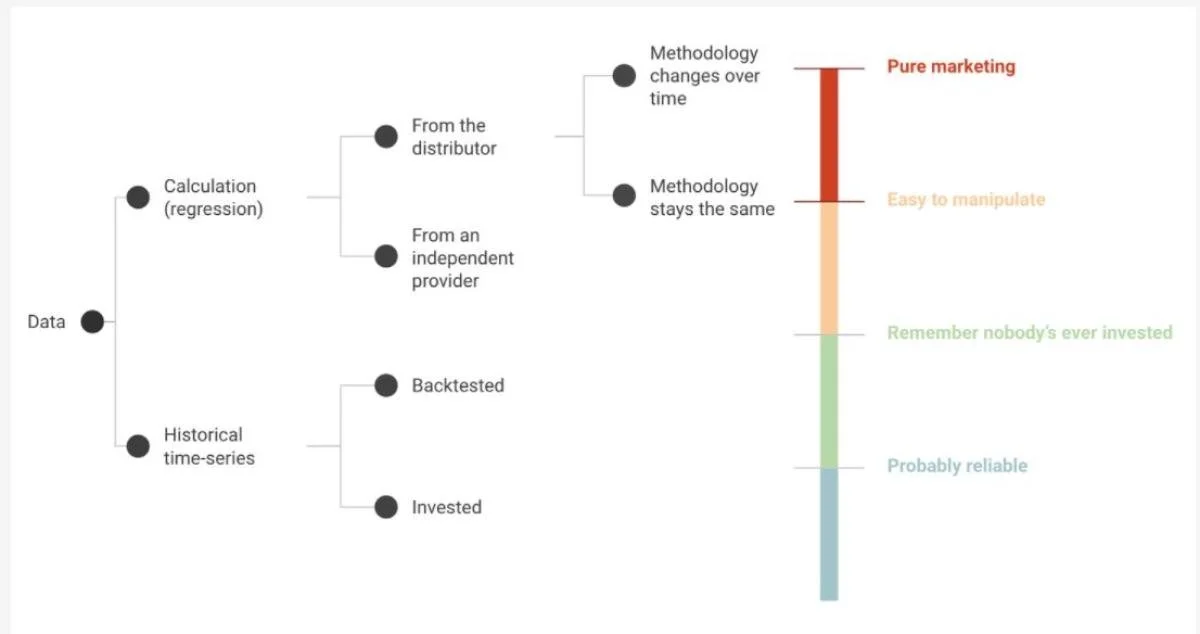
In summary, seek investments with proven historical data but remain cautious of potential manipulation of benchmarks and time periods.
Investor Question:
We want to share some of the questions we have received from existing and potential investors in the Kirkland Income Fund. This month’s question:
What is being done to be ready for a recession? What steps are taken to understand risks and mitigate these risks.
The main risk we see in a high capital cost or recession scenario is the valuation of the loan's collateral. We are always agile and looking at ways to expand our underwriting process to ensure we are as conservative as possible. Some of the key aspects that help us feel confident in valuations:
Use of external and internal valuations models.
Overlay of economic indicators to further assess discounts to valuations.
All valuations are “As Is”. We do not use future assumptions about valuations when determining the acceptable Loan to Value ratios.
Certain classifications of properties like age will require structural inspections, or full appraisals.
Realizing that private equity markets are not out of stressful times combined with a property’s idiosyncratic risk keeps us vigilant in our process to ensure our collateral will be there to support our loans.
When you have any questions about the newsletter or the Kirkland Income Fund, please do not hesitate to reply or book a call with me.
When you have any questions about the newsletter or the Kirkland Income Fund, please do not hesitate to reply or book a call with me.
