December 2024 Newsletter
Markets and Economy:
In 2024, equities reached record highs, inflation was kept in check, and we experienced a soft landing with no recession. As we move forward into 2025, it appears that we are starting on a strong and solid foundation. Will it hold for 2025?
The recent rate cut of 0.25% by the Federal Reserve didn't receive very favorable comments, and Powell acknowledged that it was a "closer call" than initially thought. Inflation remains persistent, leading to a more cautious outlook. This development has caused markets in various sectors we monitor to either fall or experience reduced average returns.
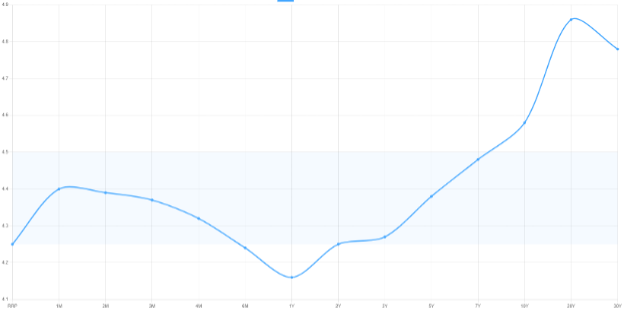
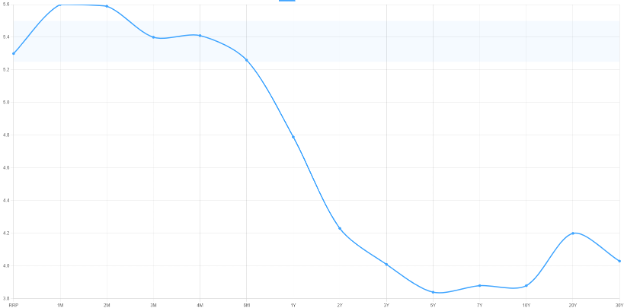
The media often hones in on short-term interest rate fluctuations, but the mortgage market is predominantly influenced by the 10-year rate. This rate has risen, standing at 4.58% by the conclusion of December 2024, up from 4.18% at the start of the month. The yield curve for the end of 2024 clearly illustrates a shift from its previously inverted position towards a steeper curve. Despite the decline in short-term rates, borrowing costs have generally been flat to up throughout 2024.
December 2024 Yield Curve
December 2023 Yield Curve
When short-term rates change, one area that is affected is the return on cash. When rates come down, the returns on cash suffer. Cash returns may potentially not even outpace the rate of inflation, leading to the need to seek out investments that offer higher returns. With cheaper cash, we should expect to see continued broader participation by investors in both debt and equity markets.
Strict borders kept labor force muted. Employment showed an upward trend, with the unemployment rate remaining largely unchanged at 4.1%.
Inflation for December was 0.4%, and 2.9% for 2024, mainly due to higher energy and food prices. Shelter costs, a persistent driver of inflation, showed slight weakness. Optimism remains that inflation will gradually decrease in 2025, though concerns about the incoming administration persist.
Economic activity is expected to rise, with stable unemployment and slightly above-target inflation, suggesting the Fed may achieve a soft landing and avoid a recession.
Lending Delinquencies:
In 2024, a lot of players in the real estate sector faced significant challenges due to economic strains and escalating debt costs, leading to a surge in delinquencies. The chart below clearly indicates that the office sector is still grappling with difficulties. Throughout 2024 this chart shows the lower-risk Commercial Mortgage-Backed Securities (CMBS) lending has experienced a notable increase in defaults. Although this chart shows some high rates, the rates might even be higher than accounted for. This year has seen a spike in a practice of "Extend and Pretend." This practice involves special loan servicers stepping in to restructure loans that have not been repaid at maturity, with lenders subsequently categorizing these loans as non-delinquent. As we head into 2025, we believe lenders will be less likely to extend delinquent loans as their balance sheet reached risk thresholds.
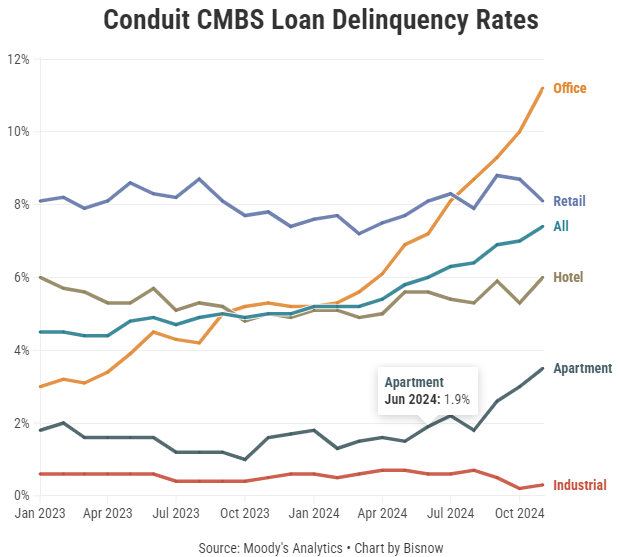
Source: MSCI
Looking Forward:
Many individuals often try to predict the future by making forecasts for 2025. The upcoming year presents a mix of opportunities and challenges that we must navigate. To avoid a 30 page newsletter, I will list out only some of the key points:
Based on the recent comments from the Fed, it appears that expecting rate cuts in 2025 might be overly optimistic. This could pose challenges for equity investors who are stuck in deals and are currently seeking viable refinancing options for them.
Any future interest rate cuts should increase the demand for loans. We are excited about new additions to an already solid pipeline.
Affordability is still an issue and demand for rentals will increase.
Cheaper cash and lower regulations will increase mergers and acquisitions (M&A) activity. Increased financial market activity will fuel the continued aggregation of assets and businesses.
Private Lending will boom as a key component of M&A and market activity.
At the beginning of 2024, there was an anticipation of a swift decrease in interest rates leading to lenders being more open to extending loans for properties. However, since this scenario did not materialize and there seems to be no imminent easing of rates, lenders may now be less inclined to extend loans, potentially resulting in more properties being available at significant discounts.
Many geopolitical hardships will still be in play. Wars, failing governments, struggling economies for some countries.
Will the new administration's actions lead to inflation through tariffs, or is it merely a strategic move to negotiate more favorable business deals for the United States?
Insurance costs will continue to rise and become increasingly difficult to secure. Real estate investors must adapt their strategies to account for the increased expenses associated with property operations.
Deregulation and strong backing from the new administration are paving the way for growth in digital investment platforms, as well as the expansion of cryptocurrencies and blockchain opportunities.
Artificial Intelligence (AI) has become an essential everyday tool, even for smaller companies such as ours. The expansion of AI is inevitable as new tools and capabilities are uncovered. There is still much more to explore beyond just content creation.
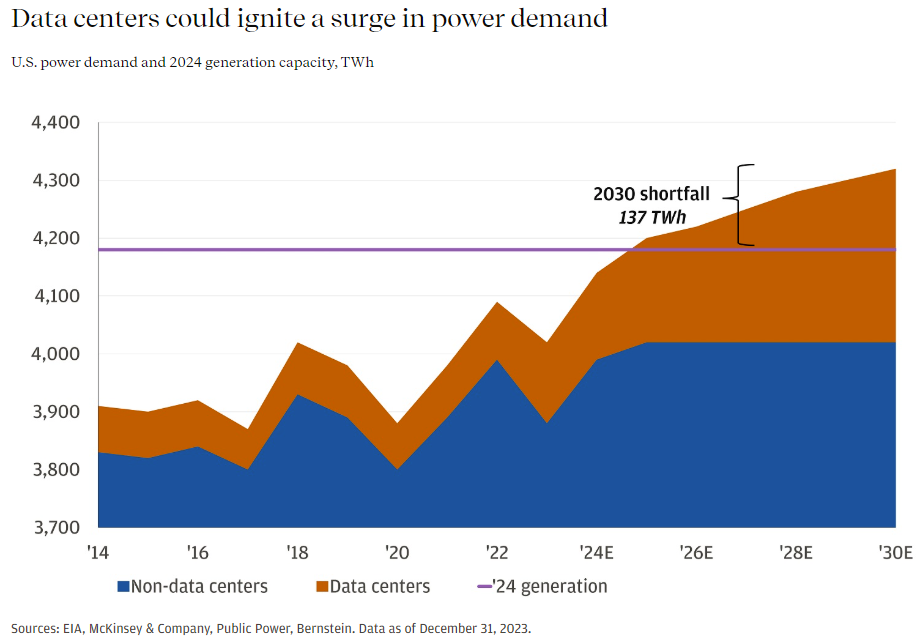
Electricity demand is expected to grow by 16% over the next 5 years, more than triple of estimates a year ago.
Fund Update:
Ah, the holiday season. It brings much happiness and joy, but also results in numerous delays in business operations.
Usually, we are booking up loans and cranking out business until the last hours of the year. This year we had a few delays that created a drag on the portfolio.
We took Winchester property to auction, and the buyer went on vacation and did not complete the paperwork, so the sale of Winchester was delayed. We have now signed the final agreements, and the sale will be completed in January.
One loan had passed underwriting, but the borrower is delaying closing till late January.
In a few other loans, we had requested the final documents, but they were not sent in December. As a result, we had to start following up with the borrowers at the beginning of the new year. This has happened before; and note to all newer investors: we will not move forward with any loan until every requested and required piece of our due diligence process is accounted for, reviewed, and passes our requirements. We will never be in a hurry to get loans done and out the door and bypass procedure.
The positive is as folks get back to work in January and February, we have the loans in the pipeline and the available funds ready to deploy.
December’s return was up 0.75% for the entire portfolio. Certainly, less than what we can produce in a month but we are excited nonetheless to have completed another month with positive returns.
We are preparing for a great year in 2025. Operationally we are in the process of hiring a Loan Advisor. We are talking with a number of amazing candidates and look forward to a new team member. This position ensures loans efficiently move through the pipeline and collaborates with our network of loan brokers to source a continuous and growing amount of loans that fit our stringent requirements. More on this position and others as we head into 2025.
Look out for our quarterly webinar where we will walk through the portfolio in greater detail covering current portfolio allocations, NPLs, and pipelines.
When you have any questions about the newsletter or the Kirkland Income Fund, please do not hesitate to reply or book a call with me.
